


Quick answer
What this guide helps you do
Fix Jellyfin access to USB media drives on Ubuntu. Check mount paths, filesystem type, permissions, fstab options, and reboot behaviour step by step.
Jellyfin beginner path
New to Jellyfin? Follow this order.
These guides form the SmallGrid Jellyfin path: install it, fix folder access, solve empty libraries, reduce unnecessary transcoding, then choose the right mini PC.
Quick answer
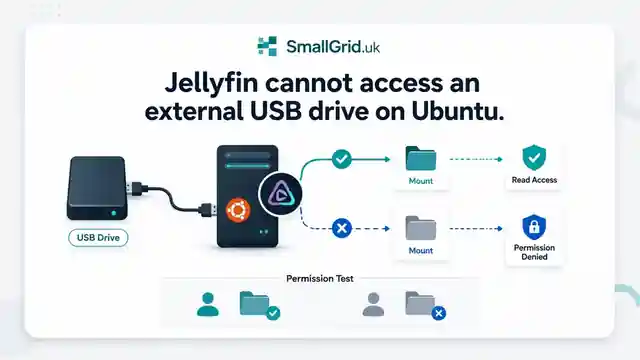
If Jellyfin cannot access an external USB drive, first confirm where Ubuntu mounted it:
lsblk -f
findmnt
Then test the actual path as the Jellyfin user:
sudo -u jellyfin ls -la /mnt/mediaIf that returns Permission denied, the fix depends on the filesystem type. ext4 normally works well with ACLs. NTFS and exFAT often require the correct mount options in /etc/fstab.
Step 1: Find the drive and filesystem
Run:
lsblk -fLook for:
- device name
- filesystem type
- UUID
- mount point
Example:
sdb1 ext4 1234-ABCD /mnt/mediaDo not assume the path is /media/username/DriveName. Desktop auto-mount paths can change and may not be suitable for a server.
Step 2: Confirm the drive is mounted
Run:
findmnt /mnt/media
ls -la /mnt/media
If findmnt shows nothing, Jellyfin is not looking at the real USB disk.
A stable server mount such as /mnt/media or /srv/media is easier to maintain.
Step 3: Test access as Jellyfin
sudo -u jellyfin ls -la /mnt/media
sudo -u jellyfin find /mnt/media -maxdepth 2 -type f | head -20
Possible results:
- files listed: permissions are probably fine
- permission denied: fix access
- empty folder: the disk may not be mounted
Use namei to inspect the full path:
namei -l /mnt/media/moviesStep 4: Fix ext4 permissions
For ext4, ACLs are usually the cleanest option:
sudo apt install -y acl
sudo setfacl -R -m u:jellyfin:rx /mnt/media
sudo setfacl -R -d -m u:jellyfin:rx /mnt/media
sudo systemctl restart jellyfin
Verify:
getfacl /mnt/media
sudo -u jellyfin ls -la /mnt/media
Step 5: Fix NTFS or exFAT mounts
NTFS and exFAT permissions are often controlled by mount options rather than normal Linux ACLs.
Check the current options:
findmnt -no SOURCE,FSTYPE,OPTIONS /mnt/mediaFind the Jellyfin group ID:
id jellyfinAn /etc/fstab entry may need options such as:
uid=
gid=
umask=
fmask=
dmask=
The exact values depend on which user or group should manage the files.
Test changes with:
sudo mount -aDo not reboot until mount -a completes without errors.
Step 6: Make the mount persistent
Find the UUID:
lsblk -fCreate a stable mount point:
sudo mkdir -p /mnt/mediaBack up and edit fstab:
sudo cp /etc/fstab /etc/fstab.backup
sudo nano /etc/fstab
Example ext4 entry:
UUID=YOUR-UUID /mnt/media ext4 defaults,nofail 0 2Then test:
sudo mount -a
findmnt /mnt/media
Step 7: Add the correct path in Jellyfin
In Jellyfin, open:
Dashboard → Libraries → Manage foldersAdd the stable Linux path, for example:
/mnt/media/movies
/mnt/media/tv
Avoid using a temporary desktop auto-mount path.
Step 8: Reboot and verify
sudo rebootAfter reconnecting:
findmnt /mnt/media
sudo -u jellyfin ls -la /mnt/media
systemctl status jellyfin --no-pager
If the library disappears after reboot, use Jellyfin Media Disappears After Reboot.
Related guides
- Give Jellyfin Access to Media Folders on Ubuntu
- Jellyfin Media Disappears After Reboot
- Jellyfin Library Not Showing Files
- Install Jellyfin on Ubuntu
Recap
Find the real mount point, identify the filesystem, test access as the jellyfin user, and make the mount persistent.
Use ACLs for ext4. Use appropriate mount options for NTFS or exFAT.
Jellyfin guide cluster
More Jellyfin fixes and setup guides
These guides link the main Jellyfin setup, permissions, remote access, direct play, and hardware topics together.
Jellyfin 12 Upgrade Guide: 10 Things to Check Before You Update
Prepare Jellyfin 10.10 or 10.11 for version 12: verify backups, plugins, Docker or Ubuntu packages, migrations, permissions, playback and rollback.
How to Reduce Jellyfin Server Power Use on Ubuntu
Reduce Jellyfin server electricity use on Ubuntu by measuring idle and playback power, avoiding unnecessary transcoding, checking background load, storage, CPU behaviour and reboot health.
Give Jellyfin Access to Media Folders on Ubuntu
Fix Jellyfin permission denied errors on Ubuntu. Test the service user, find blocked parent folders, apply safe ACLs, verify inheritance, and check mounted-drive options.
Jellyfin Library Not Showing Files? 8 Checks That Fix It
Fix a Jellyfin library that is empty or missing media. Check mounts, Linux permissions, Docker paths, library folders, naming, scans and logs in the correct order.
Jellyfin Docker Permissions: Fix Media Folder Access and UID/GID Errors
Fix Jellyfin Docker permission denied errors. Check bind mounts, container paths, UID and GID values, read-only media access, active mounts, and file visibility step by step.
Jellyfin Direct Play vs Transcoding: What Is the Difference?
Why is Jellyfin transcoding instead of Direct Playing? Compare Direct Play, Direct Stream and transcoding, CPU usage, quality and common triggers.