

Guides · SmallGrid
Guides
Practical and opinionated setups for small, efficient homelabs. No port-forwarding heroics. No rack cosplay. Just clear fixes, sensible defaults, and systems you can actually maintain.
Show all 146 tags
Pick the problem you are solving now.
Start with the guide that matches the thing currently blocking progress: Jellyfin permissions, power usage, backups, safe updates, storage, remote access, or hardware choices.
Ubuntu 26.10 for Home Servers: Should You Upgrade from 26.04 LTS?
Decide whether Ubuntu 26.10 is worth using on a Jellyfin, Docker or home-lab server, how it differs from 26.04 LTS, and how to test it safely before changing production.
Jellyfin 12.2 Update Guide: Fix Scanning, Crashes and Docker Problems
Updating to Jellyfin 12.2? Back up first, update Docker or Ubuntu safely, then fix slow scans, container crashes, out-of-memory kills and transcoding.
Docker 29.9.0 Security Update: How to Safely Update Your Home Server
Docker Engine 29.9.0 fixes multiple HTTP/2 denial-of-service issues and includes networking and image-store fixes. Check your version, update safely and verify containers, mounts and Jellyfin afterwards.
Jellyfin 12 High CPU, Memory and Scan Problems: What to Check
Jellyfin 12, 12.1 or 12.2 using too much CPU or RAM, scanning forever or transcoding unexpectedly? Check version, scan state, logs, hardware acceleration, migrations and rollback safely.
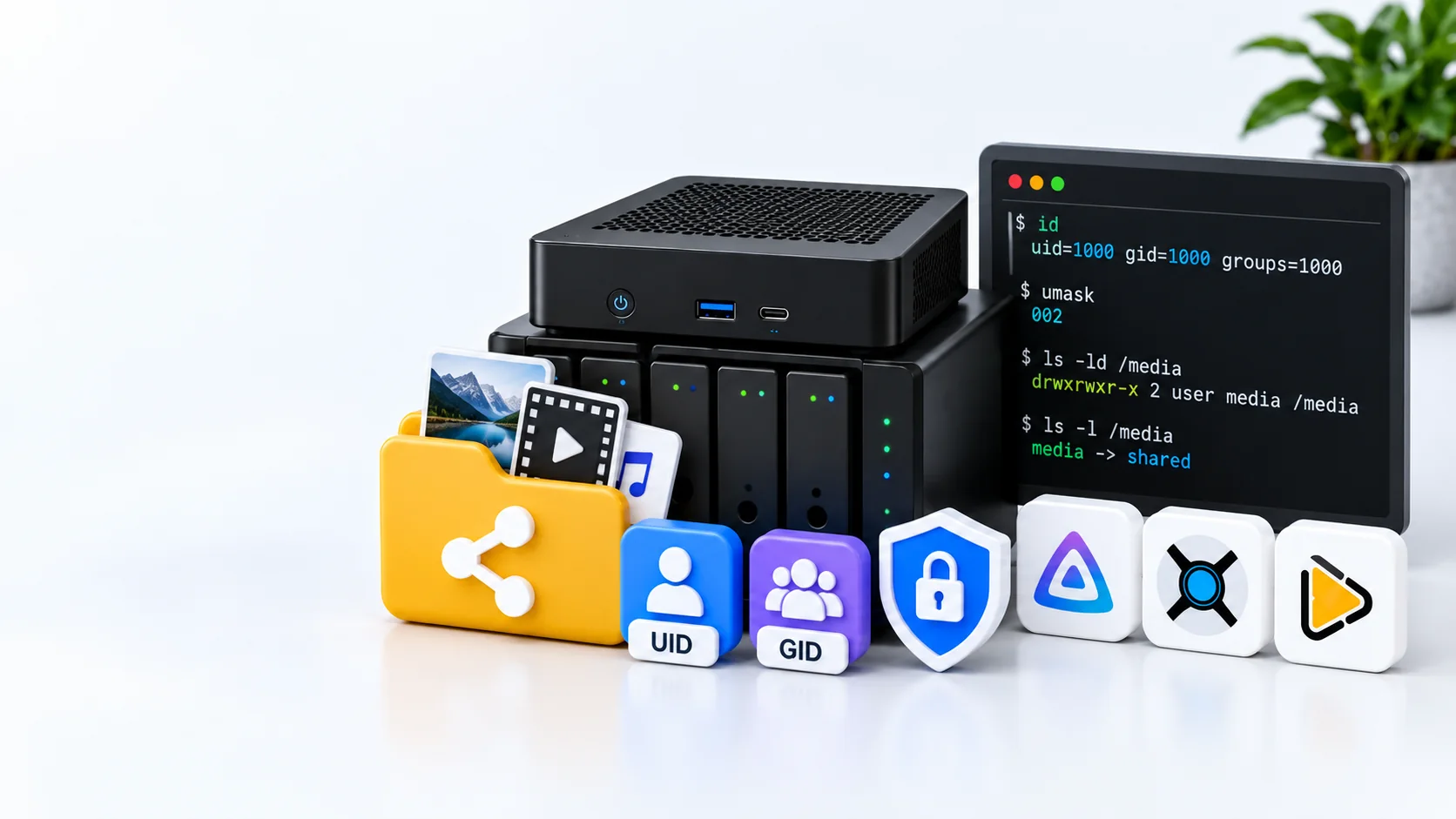
Docker File Permissions Explained: UID, GID, Umask and Shared Media Folders
Fix Docker file permission problems by understanding UID, GID, umask, PUID/PGID, shared groups, ACLs and bind mounts. Includes Jellyfin, Sonarr and Radarr examples.
Jellyfin 12 Upgrade Problems: What to Check After Updating
Upgraded to Jellyfin 12 and something looks wrong? Check migrations, the first full library scan, missing media, plugins, browser cache, playback, CPU, memory and rollback.
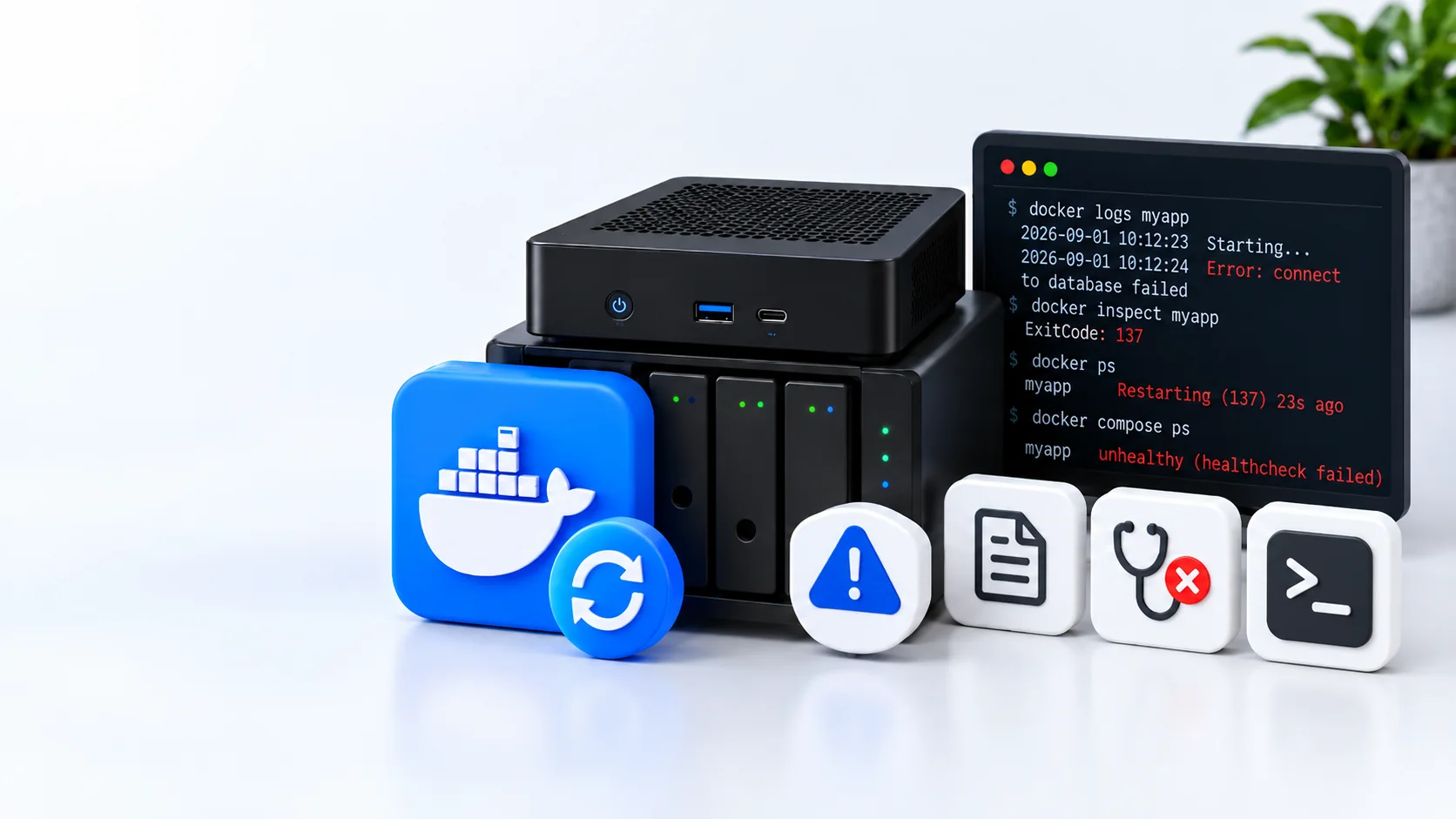
Docker Container Keeps Restarting? Check Logs, Healthchecks and Exit Codes
Fix a Docker container stuck in a restart loop by checking logs, exit codes, OOM kills, healthchecks, environment variables, volumes and Compose dependencies.
How to Back Up and Restore Jellyfin Before an Upgrade
Back up Jellyfin safely before version 12 or another upgrade. Use the built-in backup, protect Docker or Ubuntu data, test recovery and restore the matching version.
Build a Multi-Drive Media Pool with mergerfs on Ubuntu Server
Combine existing Linux disks into one mergerfs media path on Ubuntu Server, configure fstab safely, choose a create policy and verify Jellyfin and Docker access.
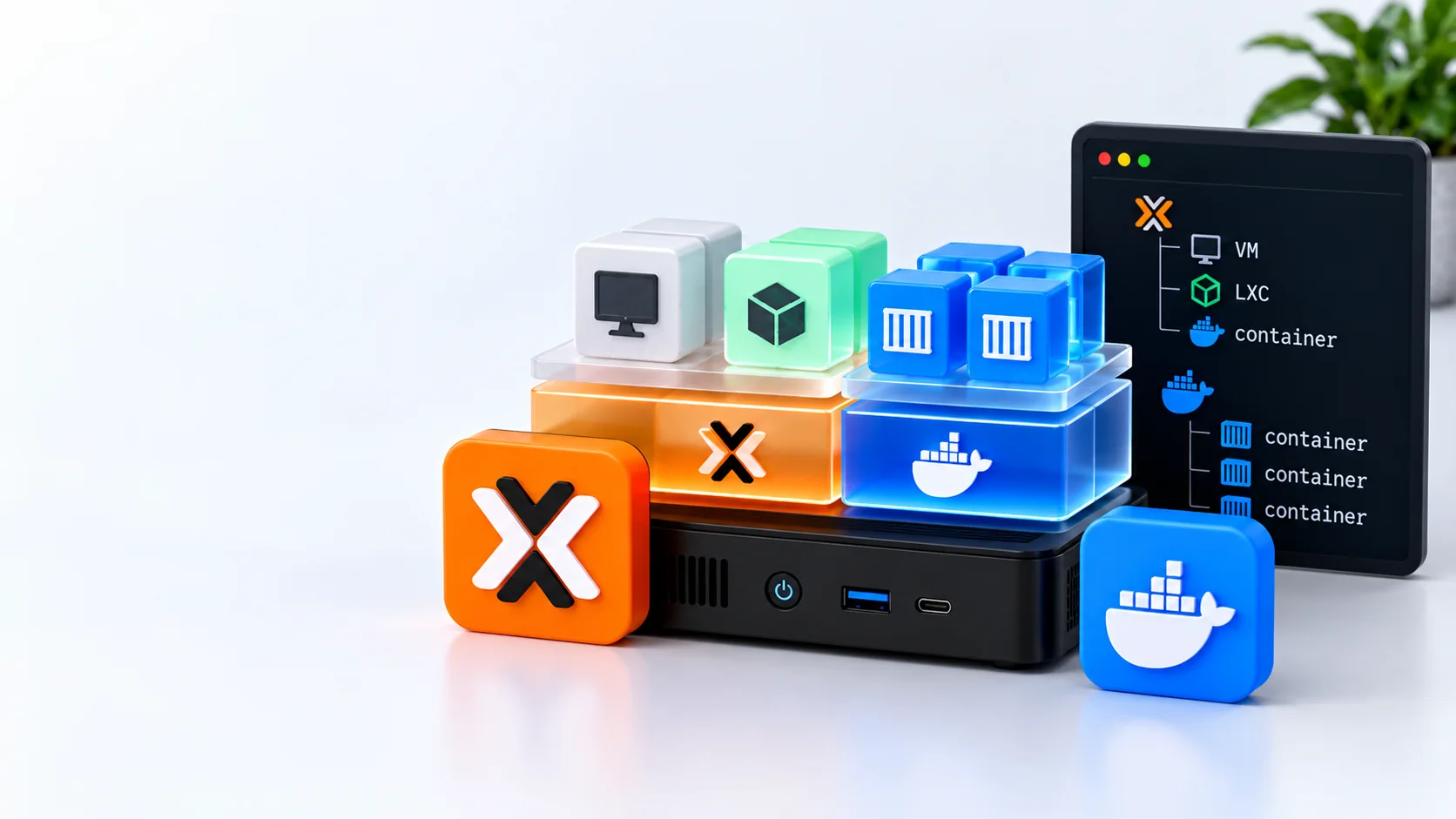
Proxmox vs Docker for a Home Lab: How VMs, LXCs and Containers Fit Together
Compare Proxmox and Docker for a home server, understand why they are different layers, and choose bare metal, a VM or LXC for Docker workloads.
Proxmox ARM64 Explained: Can You Run Proxmox on an ARM Home Server?
Understand Proxmox VE 9.2 ARM64 support, validated hardware, Raspberry Pi limits, ARM VMs and LXCs, ZFS, Ceph and whether it suits a home lab.

Ubuntu Server 24.04 to 26.04.1 Upgrade Guide for Home Servers
Upgrade an Ubuntu 24.04 home server to 26.04.1 safely while protecting Docker, Jellyfin, storage mounts, third-party repositories and remote access.
Docker Image Pull Failed After an Update? Fix Docker Engine 29.7 Problems
Diagnose Docker Engine 29.7 image-pull and docker cp regressions, update safely to 29.7.2 or later, and verify Compose, volumes and media containers.
Jellyfin 12 Upgrade Guide: 10 Things to Check Before You Update
Prepare Jellyfin 10.10 or 10.11 for version 12: verify backups, plugins, Docker or Ubuntu packages, migrations, permissions, playback and rollback.
Jellyfin System Requirements: Minimum CPU, RAM and 4K Specs
What are the minimum Jellyfin server requirements? Compare CPU, RAM, GPU and storage needs for Direct Play, 1080p, 4K and Docker setups.

What's New in Proxmox VE 9.2 for Home Labs
Understand the Proxmox VE 9.2 baseline: Debian 13.5, kernel 7.0, QEMU 11, LXC 7, ZFS 2.4, HA changes, SDN fabrics and home-lab upgrade priorities.
How to Safely Update Docker Engine on Ubuntu
Update Docker Engine on Ubuntu without combining application upgrades: inventory packages, back up persistent data, review release notes and verify every container.
How to Safely Update Jellyfin 10.11.x
Update Jellyfin 10.11 safely on Ubuntu or Docker: check the current version, take an offline backup, review plugins, update one layer and verify playback.

Jellyfin Direct Play: Complete Guide to Formats, Clients and Transcoding
Learn how Jellyfin Direct Play works, why files Direct Stream or transcode, which formats and clients are compatible, and how to reduce unnecessary server load.
Jellyfin Troubleshooting: Fix Missing Files, Scanning and Playback
Troubleshoot Jellyfin systematically. Fix missing media, scan failures, permissions, storage mounts, transcoding, subtitles, remote access and high CPU use.

Jellyfin on Ubuntu: Complete Setup, Storage and Troubleshooting Guide
Set up and maintain Jellyfin on Ubuntu Server. Follow practical guides for installation, folder permissions, storage mounts, hardware transcoding, scanning, backups and major upgrades.
How to Back Up and Restore Docker Compose Services
Build a recoverable Docker Compose backup covering definitions, secrets, bind mounts, named volumes and databases, then prove it with an isolated restore.
How to Check Drive Health with SMART on Ubuntu Server
Install smartmontools, identify the physical disk, read SATA or NVMe health data, run self-tests and recognise evidence that demands an immediate backup.
Docker Compose Explained for Beginners
Understand Compose services, images, ports, volumes, networks and environment files, then validate and operate a small self-hosted stack safely.
Docker Container Cannot Access a Mounted Folder: How to Fix It
Diagnose Docker bind-mount permission errors by checking the real host path, mount state, container UID and GID, access modes and security boundaries.
Docker Volumes vs Bind Mounts: Which Should You Use?
Compare Docker-managed volumes and host bind mounts for home-server application data, media, portability, permissions, backups and recovery.
How to Find What Is Using Disk Space on Ubuntu Server
Trace a full Ubuntu filesystem from blocks and inodes to large directories, logs, deleted-open files, Docker data and hidden mount-point contents.
How to Fix Permission Denied on Ubuntu Server
Diagnose Linux permission errors using user identity, ownership, modes, parent-directory access, groups and ACLs without falling back to chmod 777.
How to Give Docker Access to a USB Drive on Ubuntu Server
Mount a USB storage filesystem reliably on the Ubuntu host, pass its path into Docker and solve UID, GID, read-only and reboot-order problems.
Ubuntu Drive Disappears After Reboot: How to Fix It
Diagnose a disk that is present before reboot but missing afterwards by checking hardware detection, UUID-based fstab, filesystem errors, mount ordering and logs.
Docker Containers Not Starting After Reboot: How to Fix Them
Diagnose Docker services that stay stopped or fail after an Ubuntu reboot by checking the daemon, restart policies, mounts, dependencies, ports and logs.
How to Install Docker on Ubuntu Server
Install Docker Engine and the Compose plugin from Docker's official Ubuntu repository, verify the service and avoid common firewall and permissions mistakes.
How to Mount a Drive Automatically with fstab on Ubuntu Server
Identify an existing filesystem by UUID, add a safe fstab entry, test it without rebooting and recover from common boot and mount failures.
How to Move Docker Data to Another Drive Safely
Move Docker's data root to another mounted drive with identity checks, a complete stop, a reversible copy, daemon configuration and reboot verification.
How to Set a Static IP on Ubuntu Server with Netplan
Configure a stable Ubuntu Server address with Netplan, verify interface, subnet, gateway and DNS values, and avoid locking yourself out of SSH.
How to Share a Folder with Samba on Ubuntu Server
Create an authenticated Samba share for a trusted home network, align Linux permissions, validate configuration and limit firewall exposure.
How to Update Docker Containers Safely
Update Docker Compose services with release checks, version pinning, verified backups, controlled pulls, health checks and a practical rollback plan.
How to Build a Proxmox Test Lab on One Mini PC
Design a small Proxmox lab on one mini PC with separate guests, safe resource limits, internal networking, backups and practical test projects.
How to Back Up a Proxmox VM or LXC Container
Create a Proxmox VM or LXC backup, choose a backup mode and destination, verify the archive, and prepare for a real restore test.
How to Add a Second Hard Drive to Proxmox VE 9.2 Safely
Add an empty second disk to Proxmox VE 9.2, verify its identity, create Directory storage, test writes and prove the mount survives a reboot.
How to Access Proxmox Remotely with Tailscale
Reach the Proxmox web interface securely through Tailscale without forwarding port 8006, with direct-host and subnet-router options plus recovery checks.
How to Build a Docker Server Inside Proxmox
Create an Ubuntu Server VM in Proxmox, install Docker Engine and Compose safely, organise application data and verify backup and reboot recovery.
How to Create an Ubuntu LXC Container in Proxmox
Download an Ubuntu container template, create an unprivileged LXC in Proxmox, configure storage and networking, then verify updates and reboot recovery.
How to Create an Ubuntu Virtual Machine in Proxmox
Create an Ubuntu Server VM in Proxmox, choose sensible CPU, memory, disk and network settings, install the guest agent and verify reboot recovery.
How to Give a Proxmox VM a Static IP
Give a Proxmox VM a reliable address using a DHCP reservation or Ubuntu Netplan, while avoiding duplicate IPs, wrong gateways and remote lockouts.
How Proxmox VM Networking Works
Learn how a Proxmox virtual NIC, vmbr0, DHCP, gateways and DNS work together, with a simple path for checking each networking layer.
How to Upload an ISO Image to Proxmox
Download, verify and upload an operating-system ISO to the correct Proxmox storage, then diagnose missing upload buttons and failed transfers.
Jellyfin in a VM vs LXC vs Bare Metal
Compare Jellyfin on bare-metal Linux, a Proxmox virtual machine and a Proxmox LXC container across performance, isolation, storage and GPU access.
How to Mount an Existing Linux Drive in Proxmox
Mount an existing ext4 or XFS drive in Proxmox without formatting it, use a stable UUID, add Directory storage, and verify the mount after reboot.
How to Pass an Intel GPU Through to Jellyfin in Proxmox
Plan Intel iGPU PCI passthrough from Proxmox to a Jellyfin VM, verify IOMMU and QSV or VA-API, and retain a safe recovery path.
How to Move a Proxmox VM to Another Storage Drive
Move a Proxmox VM disk to different storage safely, check compatibility and capacity, verify the guest, and remove the source only after validation.
Proxmox First Setup: Updates, Repositories and Basic Security
Configure a new Proxmox VE host safely: check repositories, install updates, review access, enable two-factor authentication and verify the host after reboot.
Proxmox Disk Full: Find What Is Using the Space
Diagnose a full Proxmox filesystem or LVM-thin pool, find large backups, ISOs, logs, snapshots and guest disks, then reclaim space without deleting the wrong data.
Proxmox Directory Storage vs LVM-Thin
Compare Proxmox Directory storage and LVM-thin for VM disks, containers, ISO files, backups, snapshots, monitoring and recovery.
Proxmox Firewall Basics for a Home Server
Understand Proxmox firewall levels, plan safe allow rules, protect the management interface and avoid locking yourself out of a home server.
Proxmox Linux Bridge Explained for Beginners
Understand what vmbr0 does, how a physical network adapter connects Proxmox guests to your home network, and how to inspect bridge settings safely.
Proxmox Storage Explained: local, local-lvm and Directory Storage
Understand what local, local-lvm and Directory storage mean in Proxmox, what each can hold, and how to check where your files and virtual disks really live.
Proxmox VM Has No Internet: Fix DHCP, vmbr0, Gateway and DNS
Fix a Proxmox VM with no internet by testing its virtual NIC, DHCP address, default gateway, DNS, vmbr0, VLAN and firewall in the correct order.
Proxmox VM vs LXC: Which Should You Use?
Compare Proxmox virtual machines and LXC containers by isolation, compatibility, resources, hardware access, Docker support, backups and maintenance.
How to Restore a Proxmox Backup
Restore a Proxmox VM or LXC backup safely, avoid ID and network conflicts, verify the recovered guest, and document a repeatable recovery test.
Run Docker in a Proxmox VM or LXC?
Compare Docker in a Proxmox virtual machine and LXC container, including security, nesting, backups, hardware access and the best default for beginners.
How to Run Home Assistant in Proxmox
Install Home Assistant OS as a Proxmox virtual machine using the official KVM image, with network, USB, backup and recovery planning.
How to Run Jellyfin in Proxmox
Plan and deploy Jellyfin in a Proxmox Ubuntu VM, including media storage, Docker, networking, backups and hardware-transcoding decisions.
How to Run Pi-hole in a Proxmox LXC Container
Plan and install Pi-hole in an unprivileged Proxmox LXC container with a stable address, safe DNS migration, verification and rollback steps.
Where Should Proxmox Backups Be Stored?
Choose a safer Proxmox backup destination by comparing internal disks, USB storage, NAS shares, another server, Proxmox Backup Server and offsite copies.
How to Install Proxmox VE: Complete Beginner Guide
Prepare a Proxmox host safely, verify the ISO, choose the correct disk, configure networking, complete the installer, and record the checks needed after first boot.
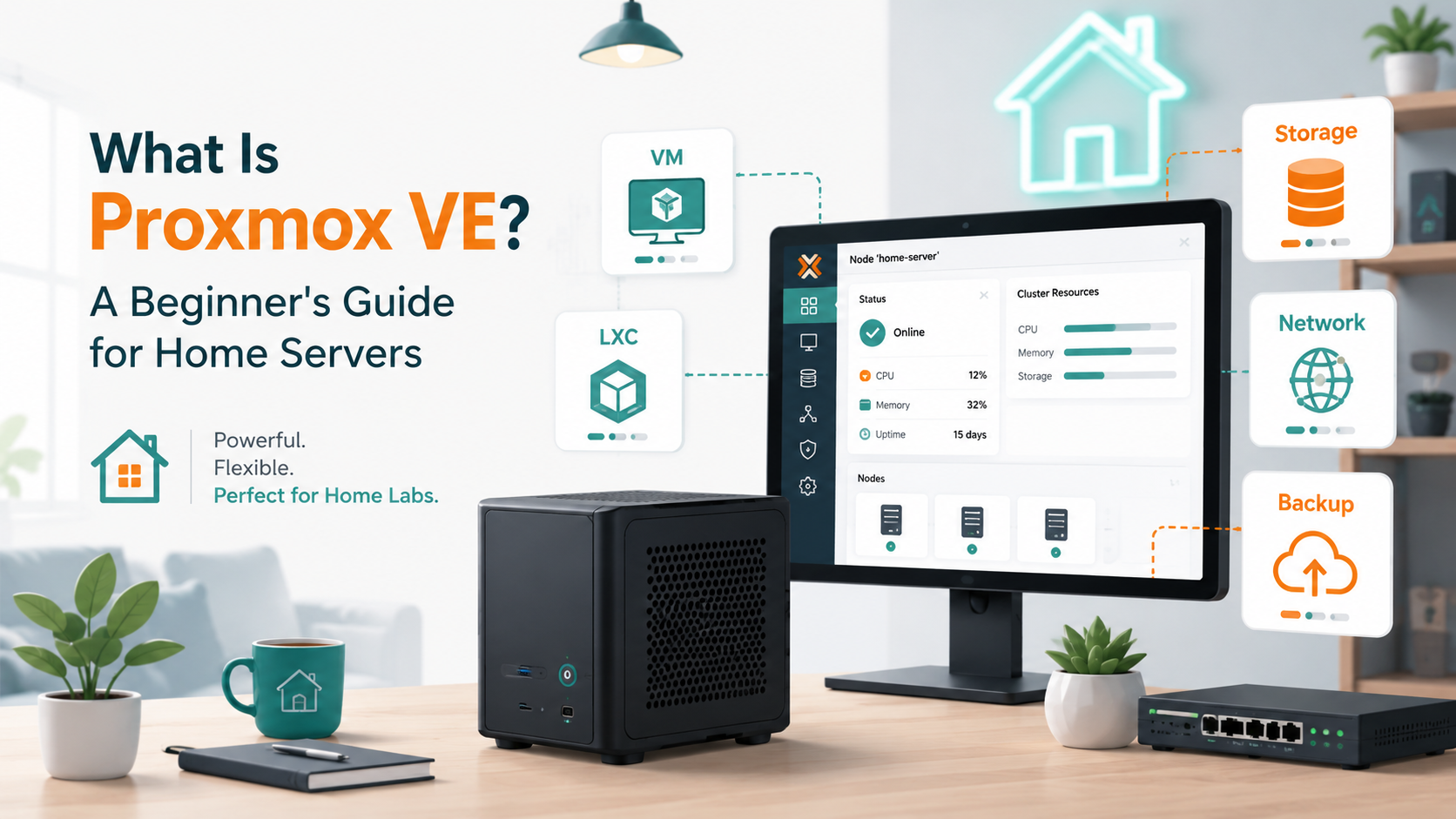
What Is Proxmox VE? A Beginner's Guide for Home Servers
Learn what Proxmox VE does, how virtual machines and LXC containers differ, what hardware it needs, and whether it is the right choice for your home server.
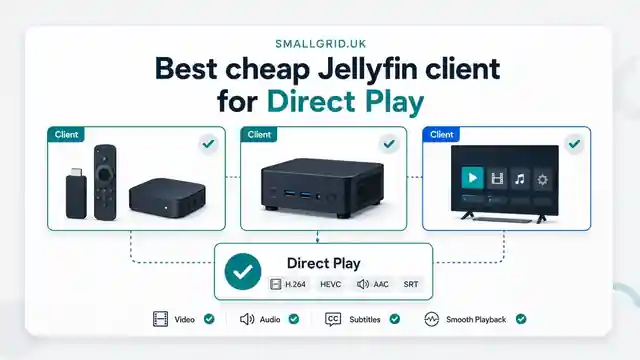
Best Cheap Jellyfin Client for Direct Play
Choose a low-cost Jellyfin client for reliable Direct Play. Compare smart-TV apps, streaming devices, mini PCs, browsers, codec support, subtitles, networking, and 4K requirements.
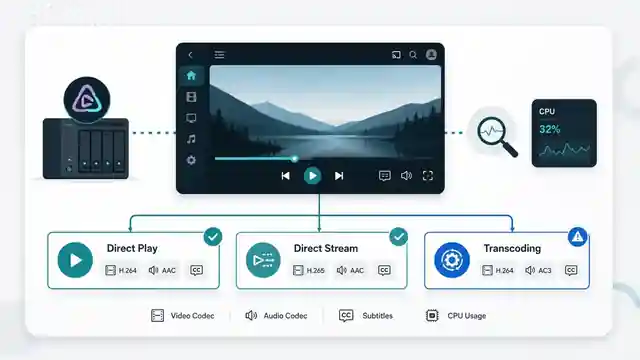
How to Check Why Jellyfin Is Transcoding
Find the exact reason Jellyfin is transcoding. Check the dashboard, playback information, codecs, subtitles, audio, bitrate limits, logs, and hardware acceleration step by step.
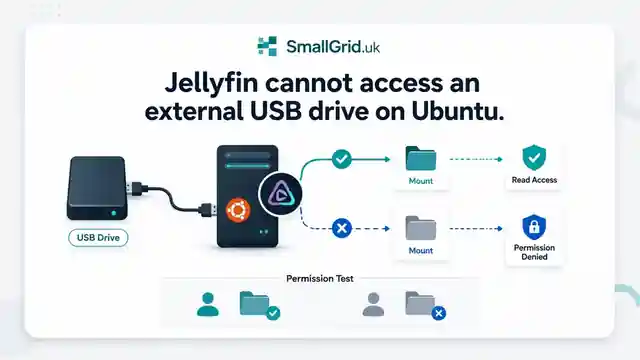
Jellyfin Cannot Access an External USB Drive on Ubuntu
Fix Jellyfin access to USB media drives on Ubuntu. Check mount paths, filesystem type, permissions, fstab options, and reboot behaviour step by step.
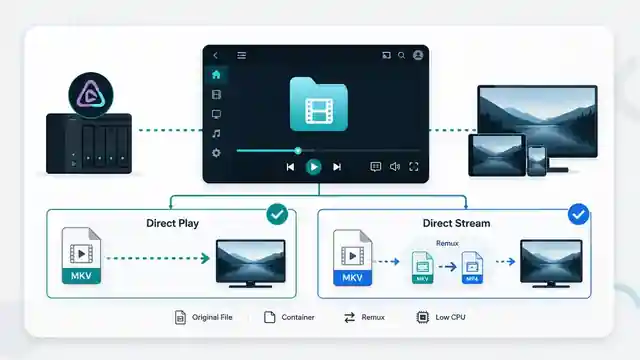
Jellyfin Direct Stream vs Direct Play: What Is the Difference?
Understand Jellyfin Direct Stream vs Direct Play, when remuxing happens, how server load changes, how to verify the playback mode, and whether Direct Stream needs fixing.
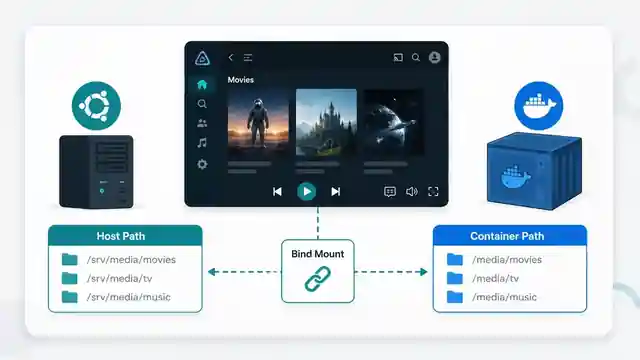
Jellyfin Docker Volume Paths Explained: Host Paths vs Container Paths
Understand Jellyfin Docker bind mounts, host paths, container paths, read-only media mounts, Compose mappings, docker inspect output, and why media folders appear empty.

Jellyfin Media Disappears After Reboot: Fix Missing Mounts
Fix Jellyfin libraries that disappear after reboot. Check mount points, UUID entries, fstab, service timing, permissions, and empty media folders.
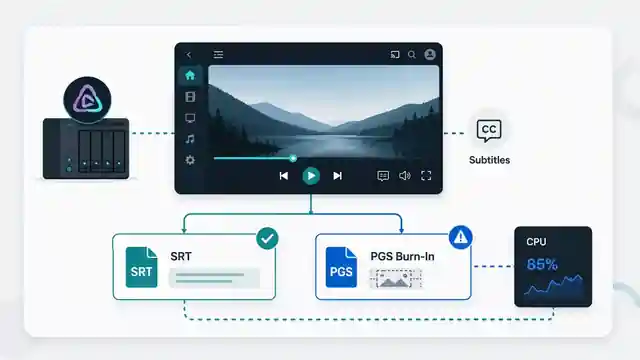
Jellyfin Subtitles Causing Transcoding: How to Stop Burn-In
Fix Jellyfin subtitle burn-in and unnecessary transcoding. Learn which subtitle formats Direct Play, why PGS causes problems, and how to test client support.
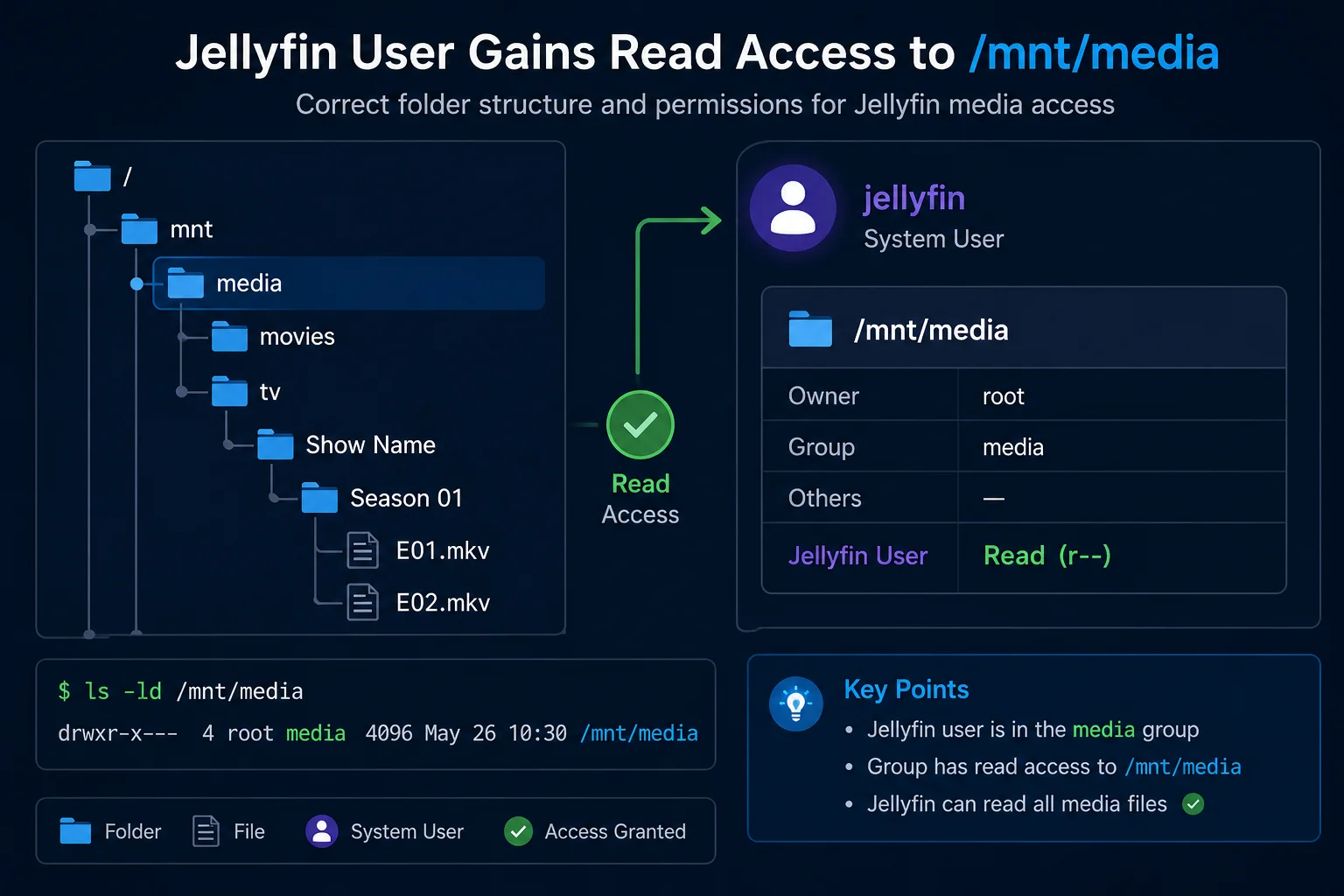
Jellyfin Not Scanning New Files? 8 Fixes for Missing Media
Fix Jellyfin when newly added movies or episodes do not appear. Check new-file permissions, mounts, Docker paths, scans, monitoring, naming and logs.
Best Mini PC for Jellyfin: CPU, RAM and Quick Sync Specs
Looking for the best mini PC for a Jellyfin server? Compare Intel N100 and used Core i5 options, Quick Sync, RAM, SSD and low-power requirements.
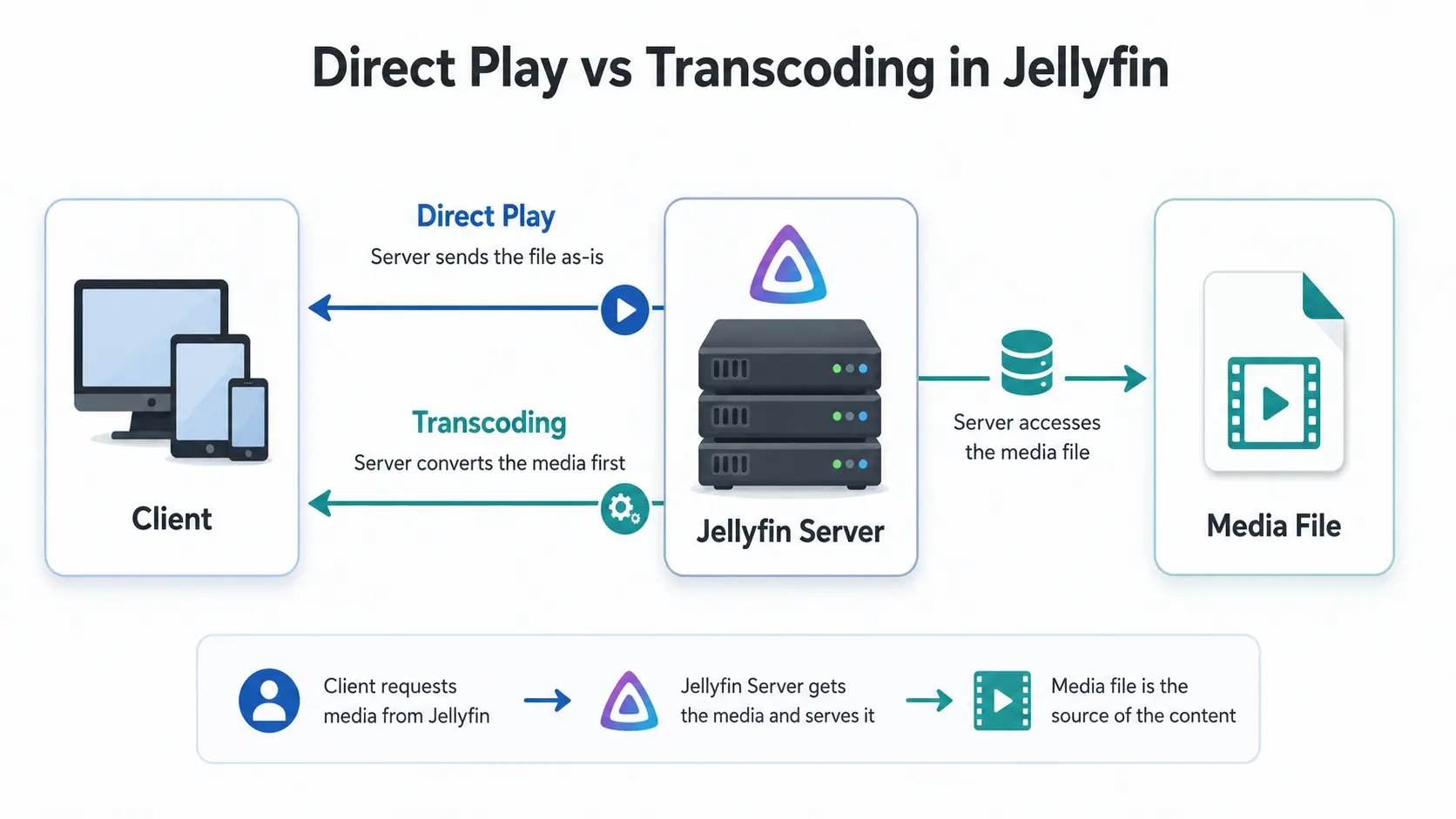
Jellyfin Supported Formats: Can It Play MKV, MP4 and HEVC?
Can Jellyfin play MKV, MP4 and HEVC? See supported containers, codecs and subtitles, plus why files Direct Play, Direct Stream or transcode.
Jellyfin Docker Permissions: Fix Media Folder Access and UID/GID Errors
Fix Jellyfin Docker permission denied errors. Check bind mounts, container paths, UID and GID values, read-only media access, active mounts, and file visibility step by step.
Jellyfin Hardware Transcoding on Ubuntu: Intel Quick Sync Setup
Set up Jellyfin hardware transcoding on Ubuntu with Intel Quick Sync, VAAPI, render permissions, and simple checks for low-power mini PCs.
Jellyfin Library Not Showing Files? 8 Checks That Fix It
Fix a Jellyfin library that is empty or missing media. Check mounts, Linux permissions, Docker paths, library folders, naming, scans and logs in the correct order.
Jellyfin on a Mini PC: Build a Quiet Low-Power Media Server
Build a quiet Jellyfin media server on a mini PC with sensible hardware, storage, direct play, backups, and low-power home lab defaults.
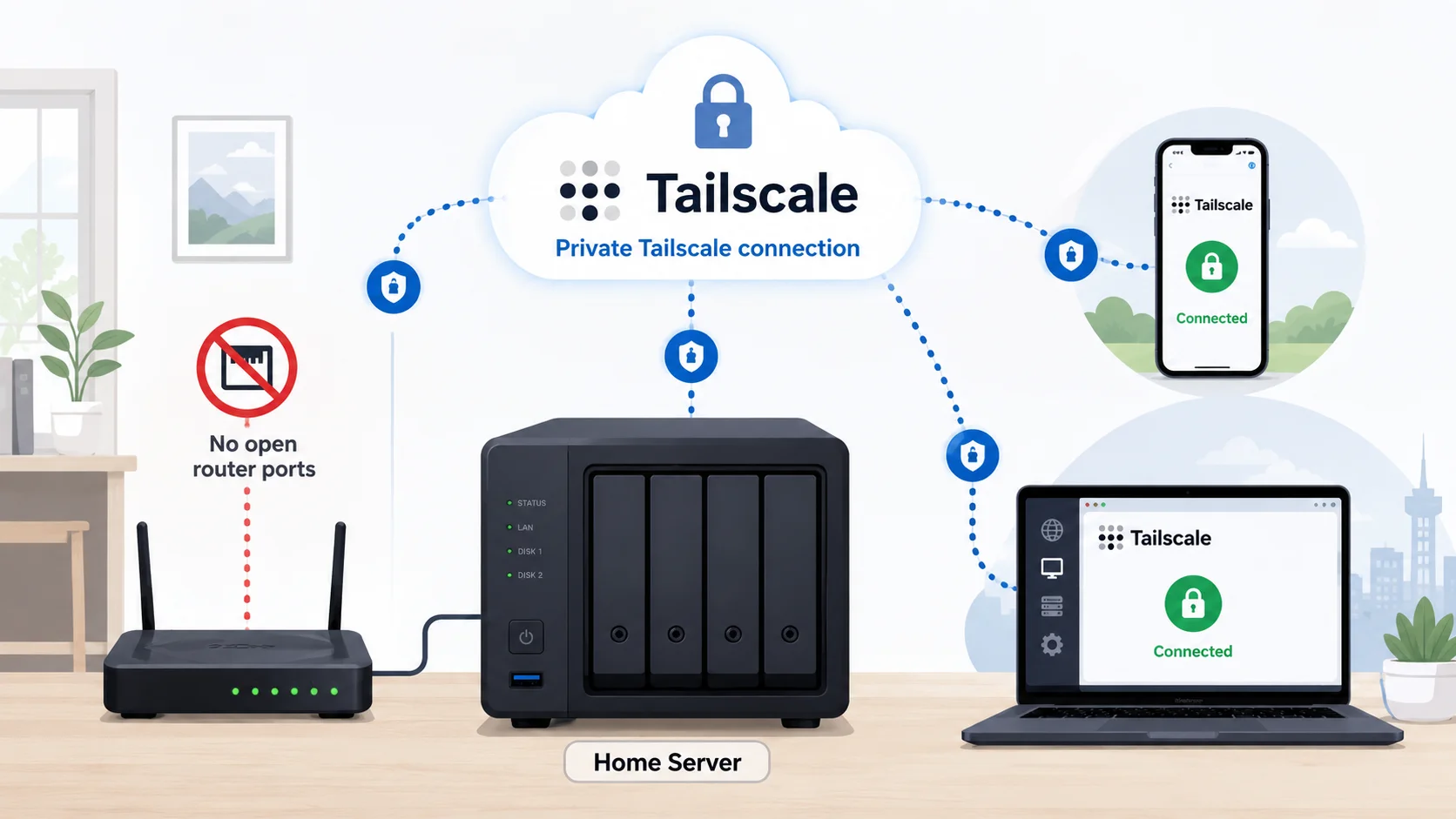
Jellyfin Remote Access Safely: Tailscale, Reverse Proxy, or VPN?
Compare safe Jellyfin remote access options, including Tailscale, VPNs, reverse proxies, HTTPS, and why port forwarding should not be the default.
Jellyfin Direct Play vs Transcoding: What Is the Difference?
Why is Jellyfin transcoding instead of Direct Playing? Compare Direct Play, Direct Stream and transcoding, CPU usage, quality and common triggers.
Give Jellyfin Access to Media Folders on Ubuntu
Fix Jellyfin permission denied errors on Ubuntu. Test the service user, find blocked parent folders, apply safe ACLs, verify inheritance, and check mounted-drive options.
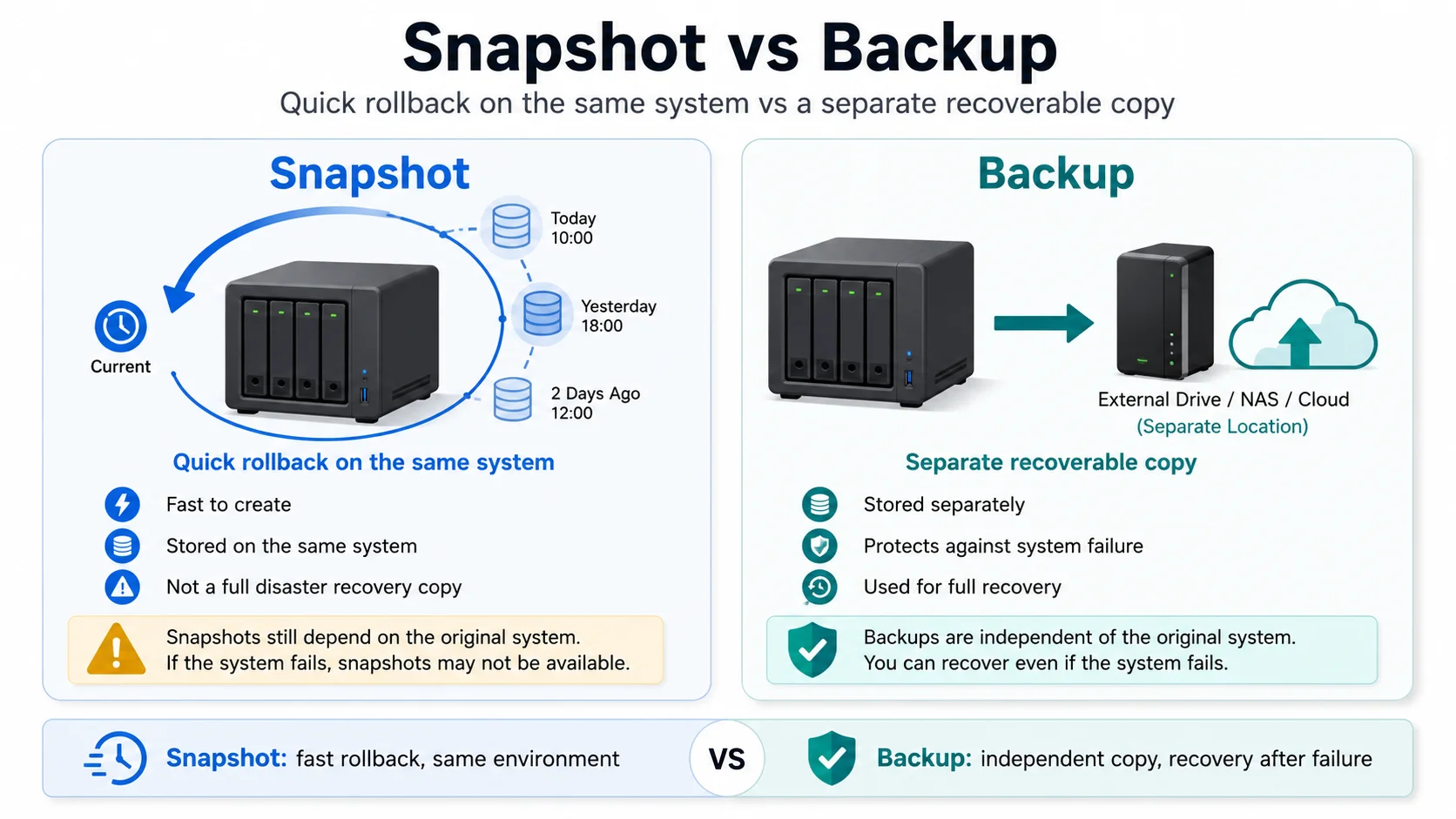
Proxmox Snapshots vs Backups: What Beginners Get Wrong
Understand the difference between Proxmox snapshots and backups, when to use each one, and why snapshots are not a recovery plan on their own.
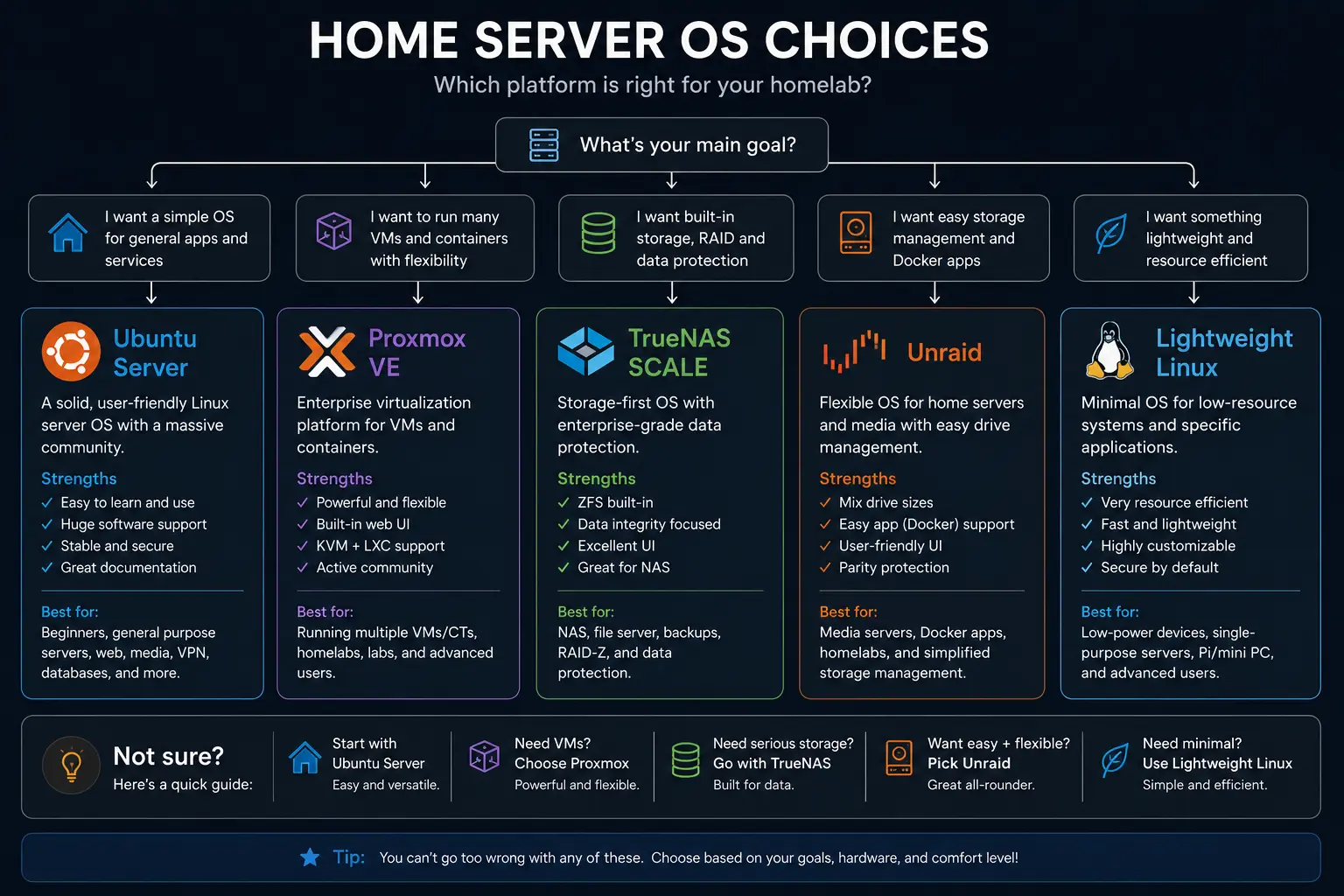
Which OS for a Home Server? Proxmox vs Bare Metal vs NAS Distros
A practical comparison of Proxmox, plain Linux, and NAS-focused distros for small, low-power homelabs.
Jellyfin Remote Access with Tailscale on Ubuntu
Access Jellyfin remotely with Tailscale on Ubuntu without port forwarding, DDNS, or a public reverse proxy. Includes setup, MagicDNS, testing, and fixes.
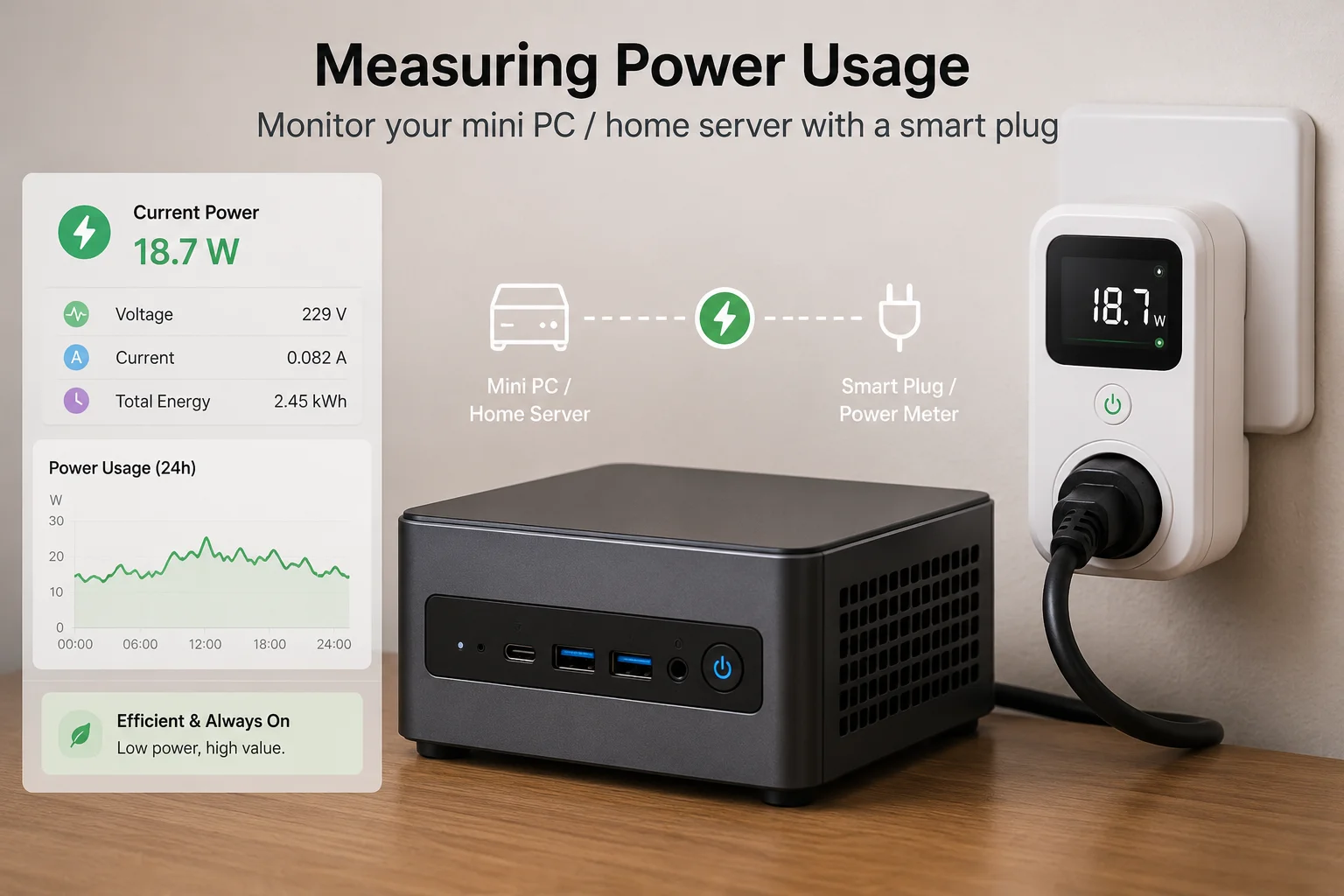
How to Measure Homelab Power Usage Properly
Measure your home server power usage, compare smart plugs and plug-in meters, and turn watts into realistic monthly and yearly costs.
Budget Mini PC Home Lab: Picking a Tiny Box That Can Actually Homelab
How to choose a used or budget mini PC for a small efficient home lab, Jellyfin, Docker, Proxmox, backups, and low-power home server use.
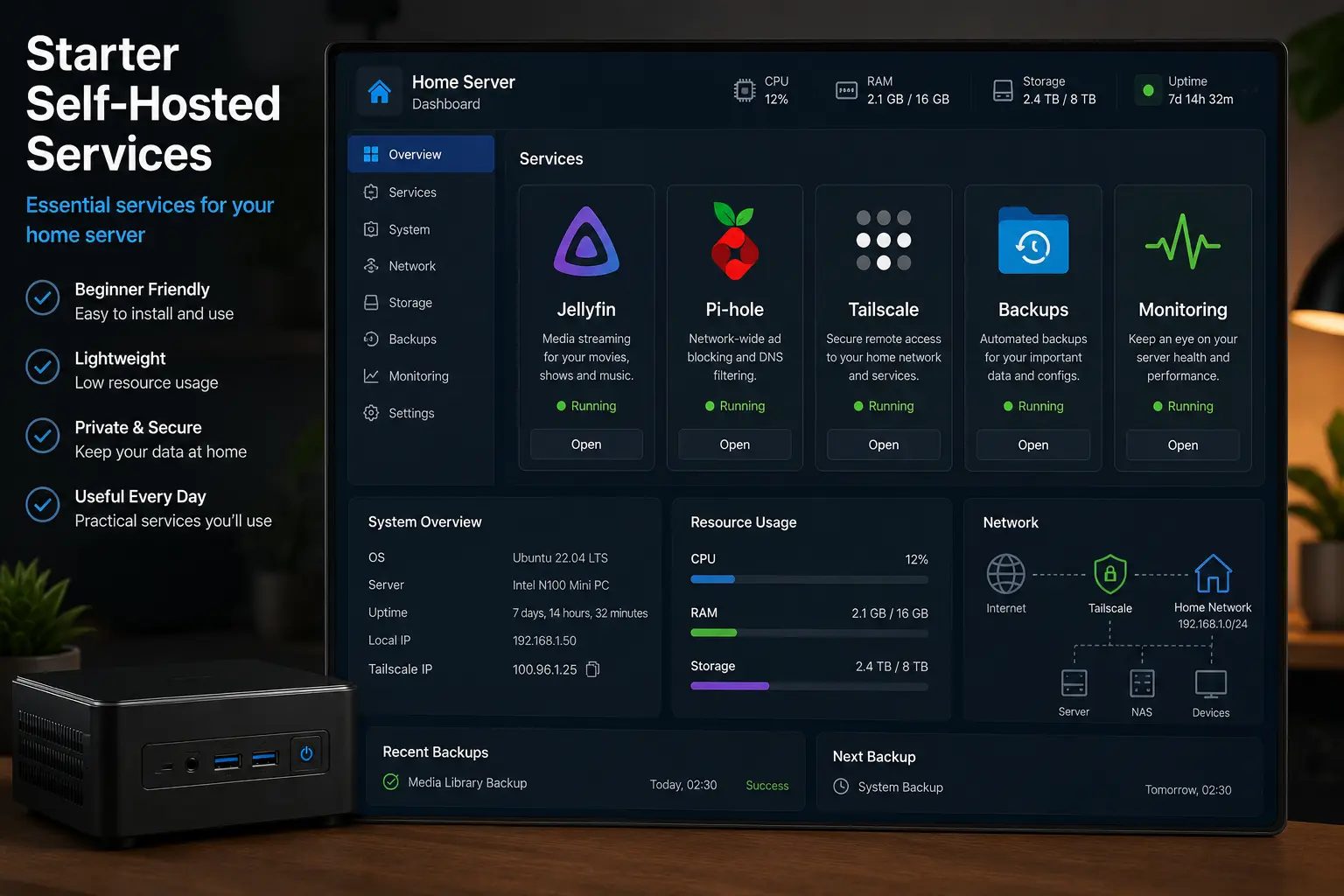
What Should You Self-Host First? A Safe Starter Stack
Choose a small first self-hosted stack with backups, private remote access, media and file sync—without exposing fragile services or deploying everything at once.
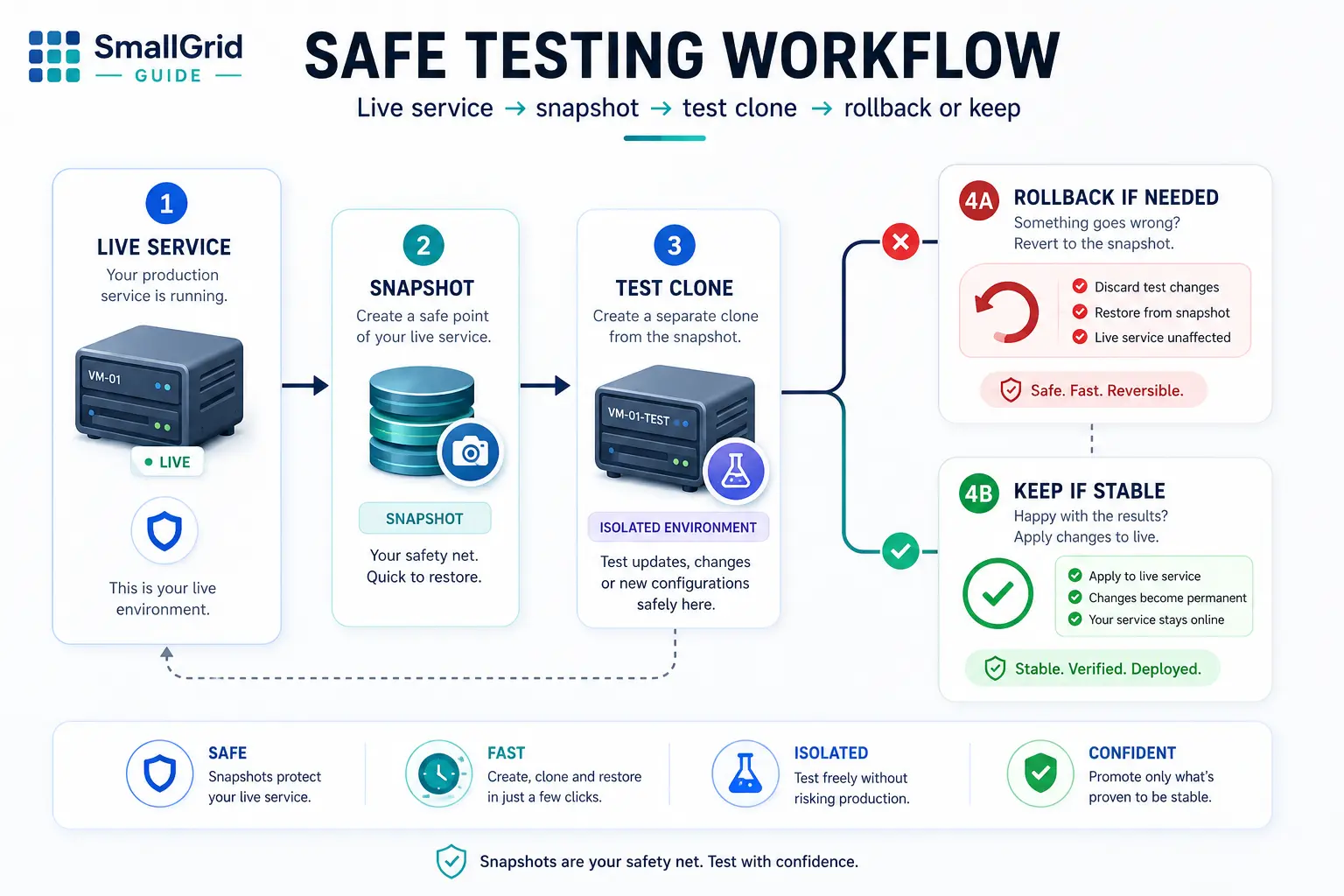
Safe Experiments: Snapshots and Test Environments for Your Homelab
Use snapshots, test VMs, and simple clones so you can tinker without breaking your working homelab.
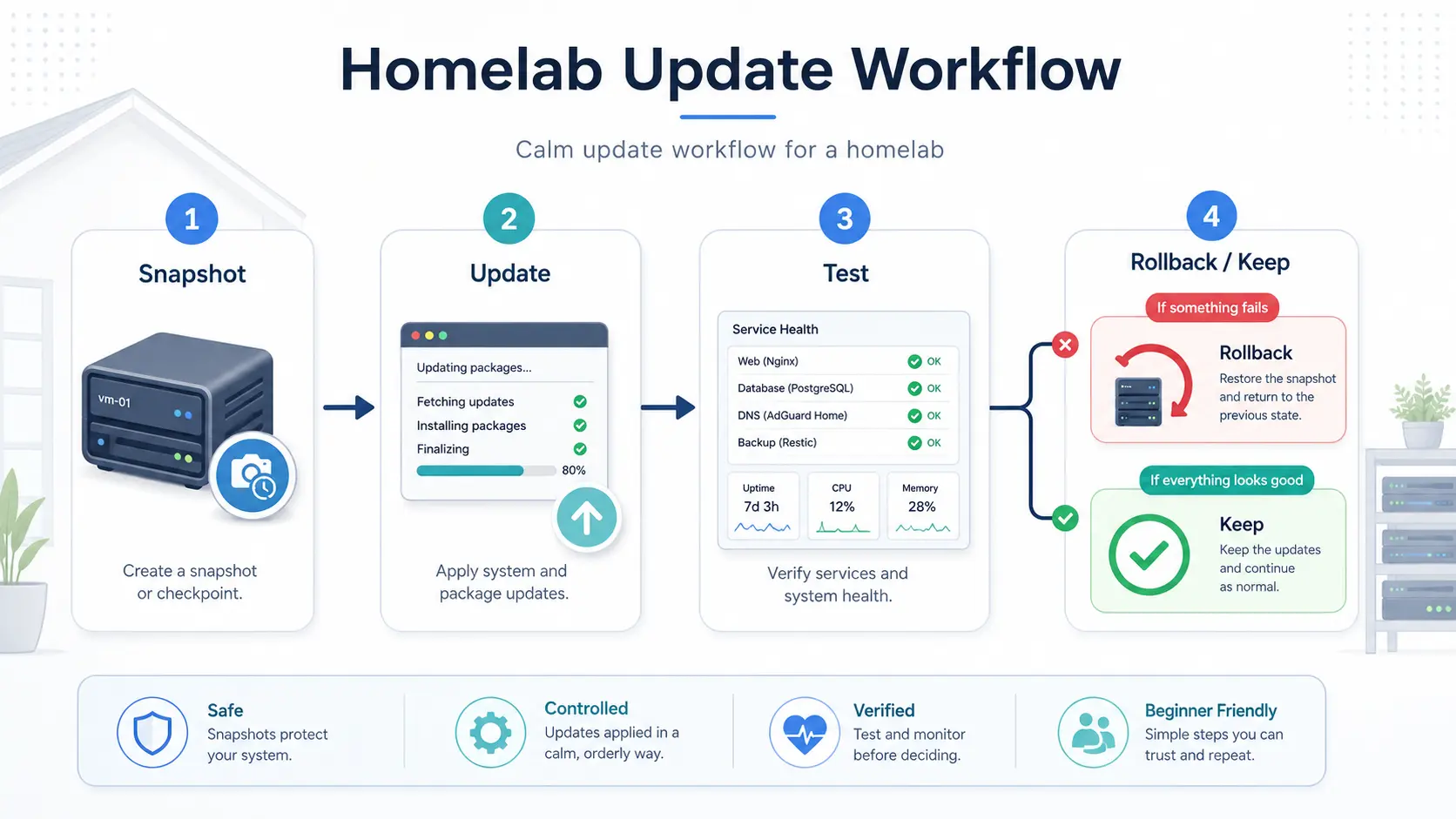
Home Lab Update Routine: Patch Ubuntu, Docker and Proxmox Safely
Use a repeatable home-lab maintenance routine for Ubuntu, Docker, Proxmox and Jellyfin, with backups, staged changes, verification and rollback.
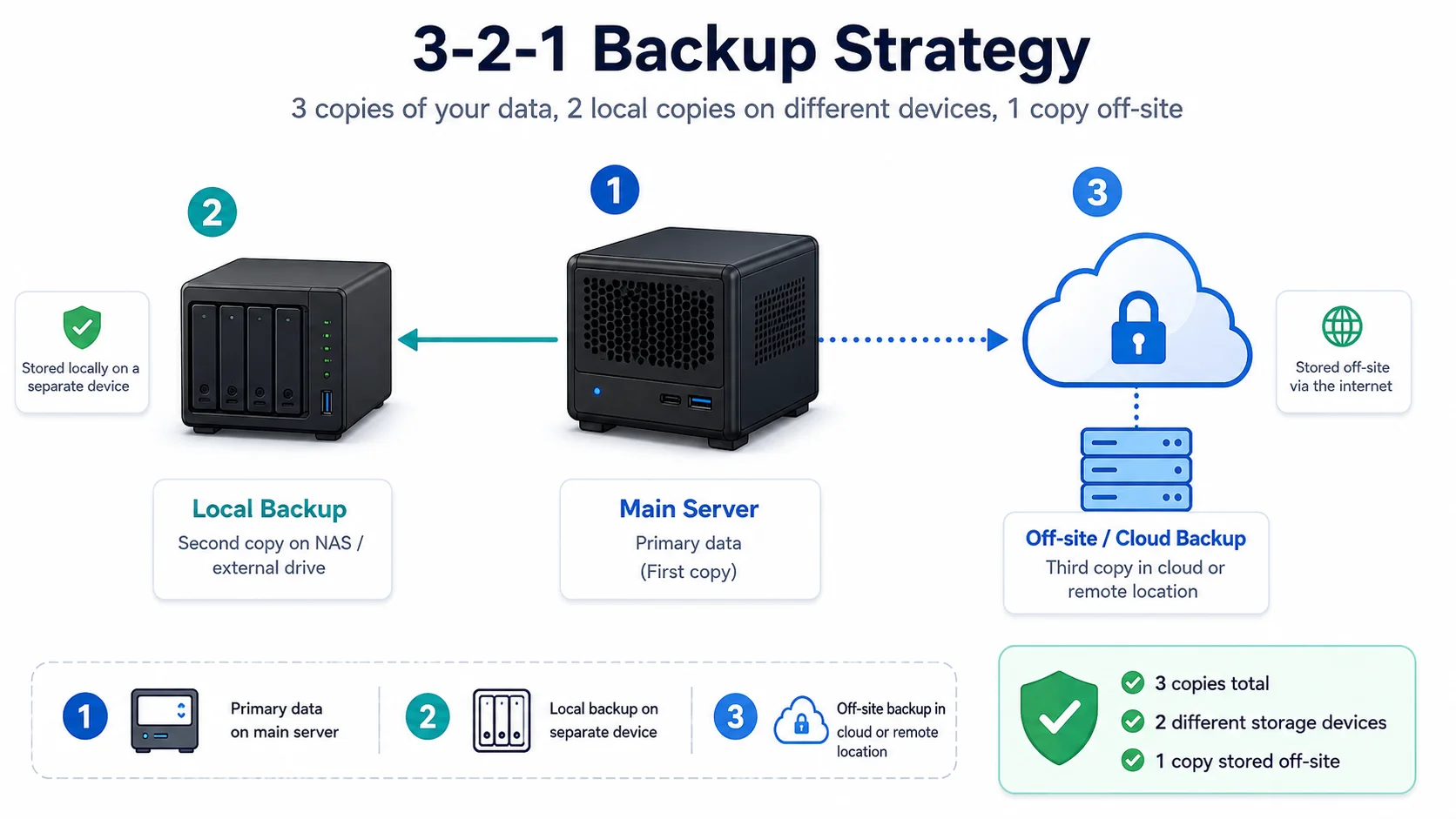
Backups That Don’t Lie: 3-2-1 for Home Servers
A simple home server backup strategy built around 3-2-1, automatic copies, offsite protection, and tested restores.
How to Reduce Jellyfin Server Power Use on Ubuntu
Reduce Jellyfin server electricity use on Ubuntu by measuring idle and playback power, avoiding unnecessary transcoding, checking background load, storage, CPU behaviour and reboot health.
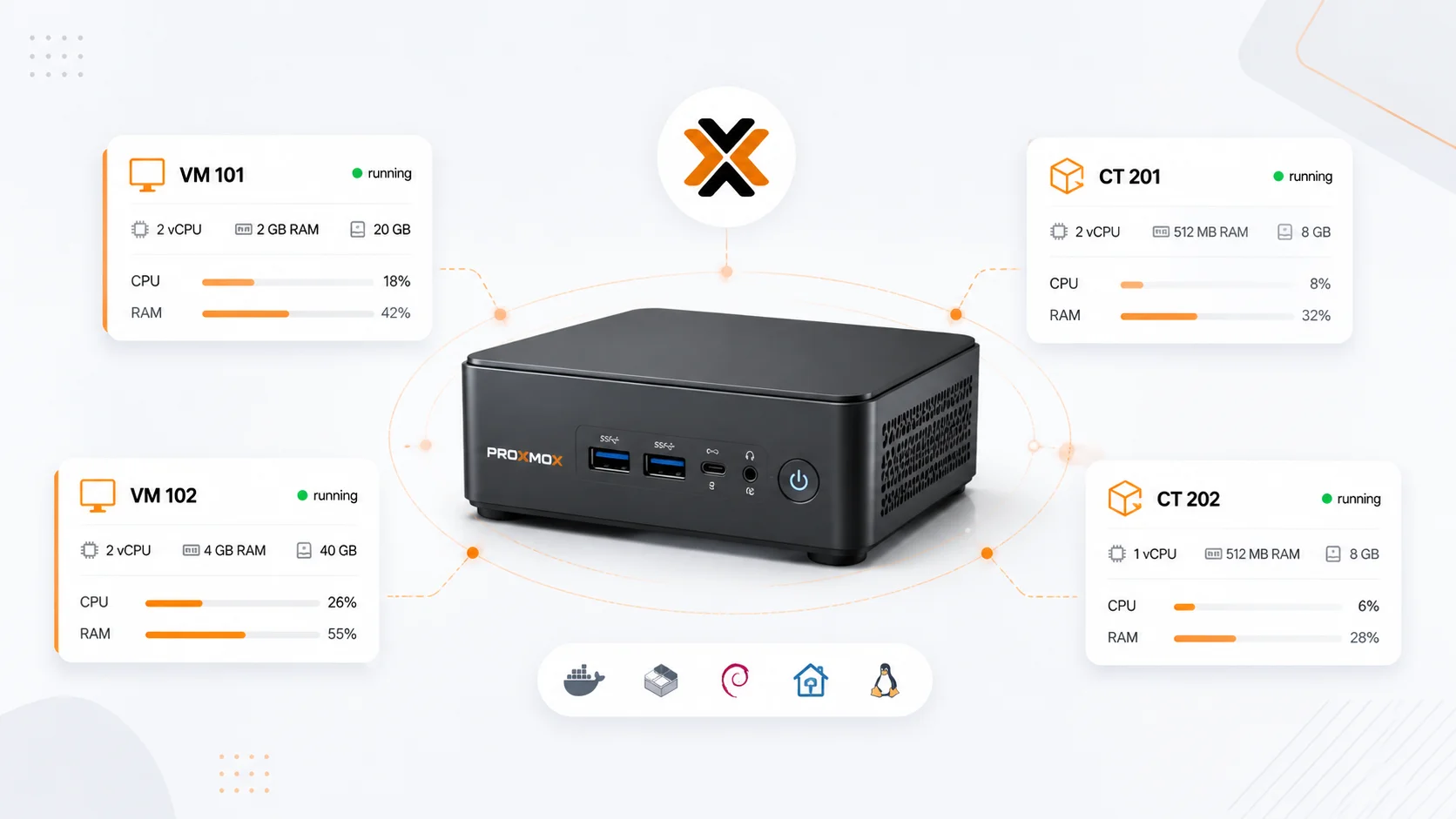
Proxmox for Normal Humans: One-Node Starter Setup
A clean one-node Proxmox setup for small homelabs: simple layout, backups, test VMs, and low-power defaults.
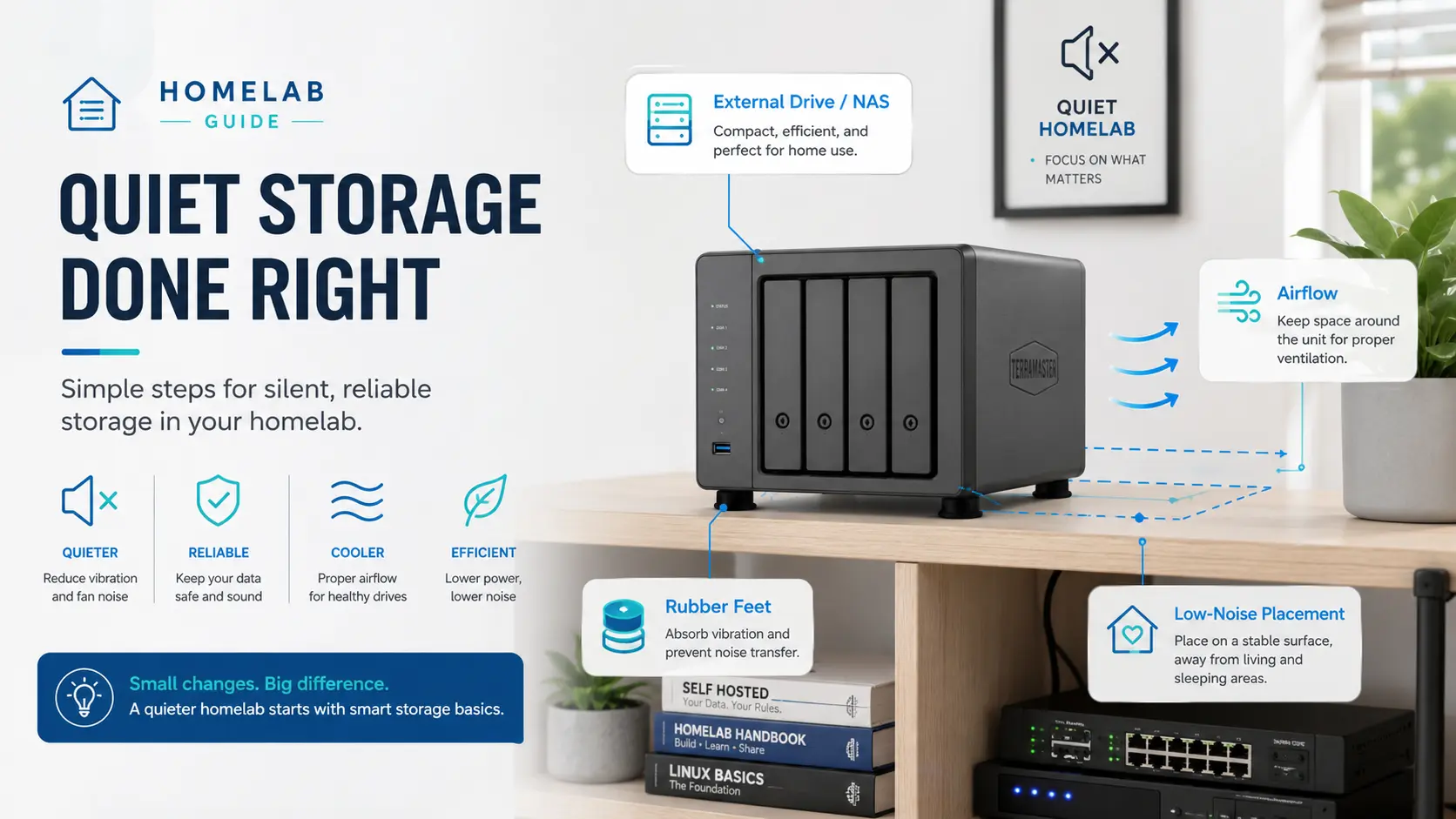
Quiet Storage: Add Disks Without Turning Your Home Into a Datacentre
Add storage to a home server quietly with better drive placement, airflow, vibration control, sensible enclosures, and realistic power choices.